
Commercial Real Estate in Cabo
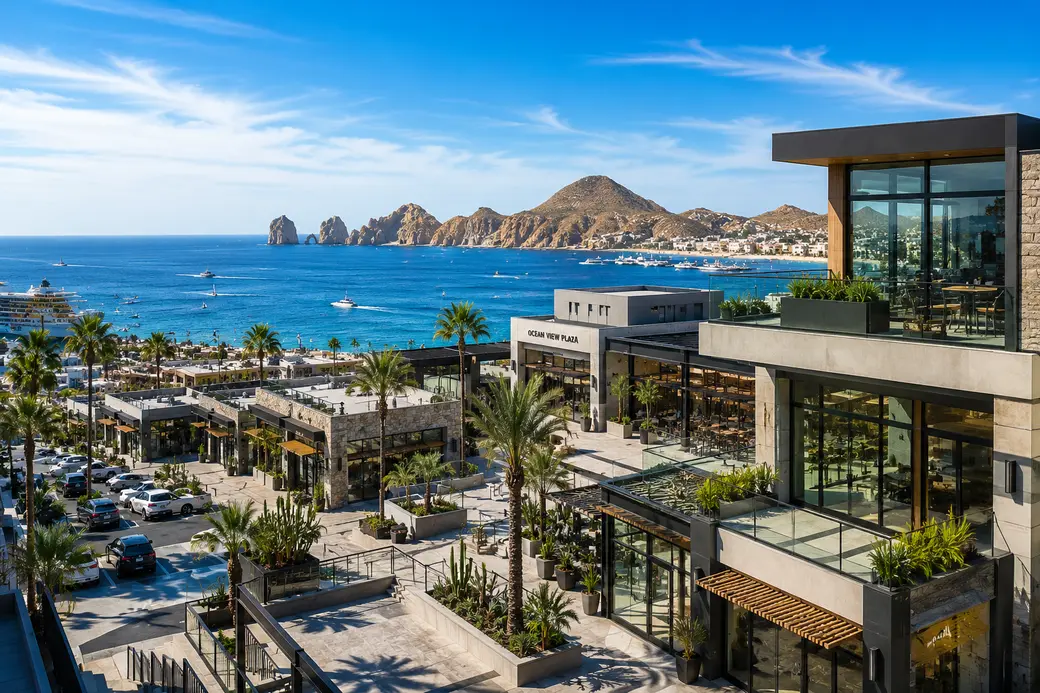
Commercial real estate in Cabo is very different from what most investors are used to in the United States or Canada because the market is still developing and financing structures are completely different. When people think about Cabo, they usually focus on luxury homes and condos, but there are actually several different commercial asset classes that are emerging as the region grows.
The first category is hotels and resorts.
Now, you do have some smaller boutique hotels throughout Cabo San Lucas, San José del Cabo, Todos Santos, and the East Cape, but generally speaking, the large institutional-quality resort product dominates the high end of the market. These deals often trade quietly off-market and can easily reach tens or even hundreds of millions of dollars. Buyers are usually institutional groups, family offices, private equity, or ultra-high-net-worth investors.
That said, one niche that actually makes a lot of sense in Cabo is hostels or more affordable hospitality concepts. Cabo has extremely high hotel average daily rates during peak season, which creates opportunities for lower-cost accommodations targeting younger travelers, surfers, fishing tourists, seasonal workers, and digital nomads.
Another major opportunity is workforce housing.
One of the realities of Baja California Sur is that a massive percentage of the labor force comes from mainland Mexico. Construction workers, hospitality staff, maintenance crews, and service employees often relocate temporarily or seasonally to Cabo because of the amount of development happening. Many construction companies already provide transportation, food, and lodging as part of employment packages.
Because of this, there is a growing need for organized workforce housing projects.
The challenge, however, is that this income stream would largely be peso-denominated. So while there may be strong long-term demand, American investors need to understand they are taking on currency risk if their liabilities or return expectations are tied to U.S. dollars.
Office space is another interesting sector.
There is a significant amount of office inventory currently being developed throughout Cabo. In fact, there’s an argument that too much office space may be coming online relative to actual demand.
But the structure of office development in Mexico differs substantially from the United States.
In the U.S., a developer may build a 60-unit office building and maintain ownership while leasing the suites to tenants over time.
In Cabo, because financing is much harder to obtain and construction lending is limited, developers often sell the office suites individually as commercial condos in order to recover capital faster and reduce financing risk.
So instead of one landlord owning an entire office complex, you frequently end up with dozens of individual owners.
Multifamily is another category that behaves very differently here.
Traditional large-scale apartment projects are still relatively rare in Cabo. You may find smaller rental buildings with 6, 10, or 15 units, but once projects start reaching larger scale, developers almost always transition into condominium sales rather than holding long-term rental inventory.
Again, this largely comes back to financing structures.
In the United States, developers commonly build 100- or 200-unit apartment complexes, stabilize them with tenants, and hold them for long-term cash flow.
In Cabo, the lack of cheap long-term financing pushes developers toward selling units individually in order to recycle capital quickly.
That’s why true institutional multifamily product is still fairly limited in the region.
You also have retail and malls.
The larger shopping centers and mall projects in Mexico are often owned or operated by Mexican FIBRAs, which are essentially the Mexican equivalent of U.S. REITs. These are generally publicly traded investment vehicles that own portfolios of commercial real estate assets.
Smaller retail plazas exist throughout Cabo as well, particularly in high-growth residential corridors, but once again, many of these are sold off unit by unit rather than operated under a single ownership structure.
Finally, you have industrial real estate.
This sector is becoming increasingly important as Cabo continues to expand. Growth in tourism, construction, e-commerce, logistics, and infrastructure is driving demand for warehouses, cold storage facilities, distribution centers, and industrial service space.
You also have broader regional logistics tied to places like La Paz and the port infrastructure there, which supports supply chains moving into Los Cabos and surrounding Baja markets.
The big picture is that Cabo commercial real estate is still evolving.
Many sectors remain fragmented, inefficient, and difficult to value compared to mature U.S. markets. But that inefficiency also creates opportunity for investors who understand the local dynamics, financing limitations, labor realities, tourism growth, and long-term infrastructure expansion happening across Baja California Sur.
One of the biggest differences between residential and commercial real estate in Cabo is pricing transparency. Residential has far more data points. You can usually look at comparable homes, condos, recent sales, active inventory, days on market, price-per-square-foot trends, HOA structures, and financing activity to get relatively close to fair market value.
Commercial is a completely different animal.
In Cabo, commercial real estate is a much more inefficient market because there are fewer transactions, fewer publicly available sales comps, and every asset is highly dependent on its specific use case. A downtown bar, nightclub, restaurant, multifamily building, boutique hotel, retail strip center, or development lot can all trade very differently even if they sit within blocks of each other.
For example, a bar or nightclub in downtown Cabo is not just being valued on the real estate itself. Buyers are also looking at:
Existing cash flow
Liquor permits
Brand recognition
Foot traffic
Late-night exposure
Lease structures
Ability to reposition the concept
Tourism cycles
Noise restrictions
Parking
Competition nearby
Future redevelopment potential
Sometimes the real estate is worth more than the business. Other times the business operations are the primary value driver.
Then you take something like a multifamily property with an adjacent lot, and now the valuation changes again. Buyers may underwrite that deal based on:
Current rental income, Long-term vs short-term rental potential, Density/zoning upside, Ability to add units, Parking ratios, Future appreciation of the land, Replacement cost to build today, Location relative to downtown and the marina, Whether the highest and best use is holding, redeveloping, or operating as-is.
And in Cabo specifically, there are simply not enough true comparable commercial sales to create a perfectly efficient market.
A residential broker may have 15 comps.
A commercial broker may realistically only have 1 or 2 relevant data points over several years.
That creates huge pricing spreads.
You’ll often see:
Sellers anchored to peak-Cabo optimism
Buyers trying to apply U.S. cap rates that don’t fully translate to Mexico
Off-market deals with no public pricing history
Owners valuing emotional attachment instead of cash flow
Assets sitting because pricing is disconnected from market reality
The reality is that commercial pricing in Cabo is often discovered through negotiation more than pure data.
And because of that, strategy matters far more.
Sometimes the best move is pricing aggressively high to test the market quietly with a small buyer pool.
Other times the right play is pricing closer to replacement cost to generate momentum and create competition.
And in downtown Cabo specifically, there’s another wildcard: redevelopment value.
A buyer may not care about the existing business at all. They may simply want the dirt because they believe Cabo’s long-term growth, tourism expansion, marina traffic, and downtown scarcity justify assembling properties for future projects.
That’s why commercial deals here can look wildly inconsistent from the outside.
Two properties may appear similar on paper but trade millions apart depending on:
entitlement potential, frontage, parking, licenses, tenant mix, income stability, and future development upside.
Commercial real estate in Cabo is less about finding the exact number and more about identifying the range where sophisticated buyers see opportunity.
That’s where experience in the local market becomes critical because many of these deals are not solved through spreadsheets alone.
If you are looking at commercial real estate opportunities in Cabo — whether it’s hotels, workforce housing, multifamily, office, retail plazas, industrial, development land, or nightlife properties — working with someone who understands both the local market and how these deals are actually structured in Mexico matters.
Fletcher Wheaton specializes in Baja California Sur real estate with experience ranging from luxury residential developments to commercial assets, mixed-use opportunities, redevelopment plays, and investment analysis throughout Los Cabos, the East Cape, Todos Santos, La Paz, and Loreto.
Unlike many markets in the United States, Cabo commercial real estate is highly relationship-driven, often trades off-market, and operates with very different financing, zoning, infrastructure, and ownership dynamics. Understanding construction costs, entitlement risk, tourism growth, labor trends, and long-term development patterns is critical when evaluating opportunities here.
For commercial real estate inquiries in Cabo or Baja California Sur, contact Fletcher Wheaton at:
Fletcher Wheaton
Email: fletcher@remexico.com
Whether you are looking at a downtown redevelopment opportunity, hospitality investment, industrial land, workforce housing, or a mixed-use project, Fletcher can help navigate the realities of commercial investing in Mexico.
Categories
- All Blogs (226)
- Agent Training (5)
- Cabo Golf (12)
- Cabo Legal (34)
- Cabo Real Estate (100)
- Cabo Restaurants (3)
- Commercial Real Estate in Cabo (4)
- Construction (18)
- Destination News (21)
- East Cape (7)
- Financing (3)
- Land Banking (2)
- Loreto (2)
- Luxury Homes in Cabo (11)
- Market Report (5)
- Mulege (2)
- Neighborhoods (3)
- Pre-Construction (17)
- Remexico Real Estate Agents (2)
- Residency (2)
- Sports (6)
- Taxes (5)
- Todos Santos (7)
Recent Posts





GET MORE INFORMATION
