
Cabo Pre-Construction Real Estate: Risks, Delays, and What Buyers Need to Know (2026 Guide)
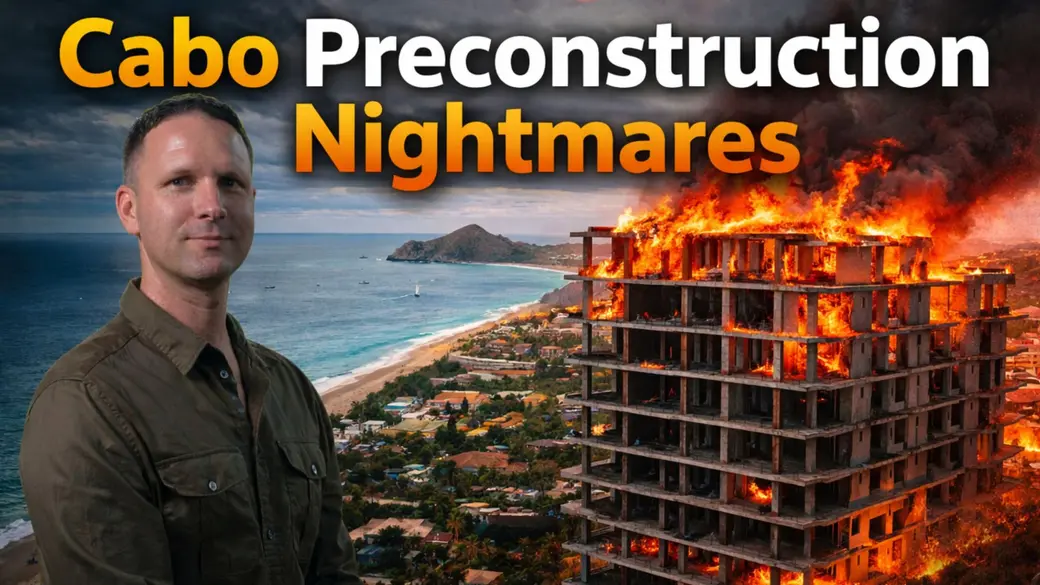
If you’re considering buying real estate in Cabo, especially pre-construction, there’s one thing you need to understand: not all opportunities are created equal—and not all projects finish on time.
Right now in Cabo San Lucas and San José del Cabo, we’re seeing a shift in the market. Demand is still there, flights are full, and the lifestyle appeal hasn’t changed. But underneath that, the pre-construction segment is facing pressure from higher financing costs, resale competition, and broader economic changes that are starting to impact how projects move forward.
Pre-construction, in simple terms, means buying a property before or during the construction phase. In Cabo, this typically involves putting down 30–40%, making staged payments throughout the build, and paying the balance upon delivery. On paper, it sounds like a great deal—you’re getting in early, locking in pricing, and ideally benefiting from appreciation by the time the project is complete.
What many buyers don’t fully realize is that when you buy pre-construction, you are effectively helping finance the developer’s project. That model works well when everything goes according to plan. But when it doesn’t, that’s where things get complicated.
Across Cabo, particularly in areas like Pedregal, El Tezal, and parts of the Tourist Corridor, there are projects that have slowed down or paused altogether. In many cases, this isn’t because of a single issue, but rather a combination of factors hitting at the same time.
One of the biggest challenges right now is slower sales velocity. Pre-construction developments rely heavily on continued buyer demand to fund ongoing construction. When sales begin to slow, developers often have to adjust timelines, and in some cases, pause work entirely until more inventory is sold.
At the same time, resale inventory has become much more competitive. Buyers today can find completed, turnkey properties—sometimes at the same price or even cheaper than pre-construction units. That creates a very real shift in buyer behavior. Instead of waiting two to four years, many are choosing to buy something they can use immediately or rent right away.
Layer on top of that the currency dynamic and rising construction costs. The Mexican peso has strengthened significantly against the U.S. dollar, while labor and materials have become more expensive. For developers, this can translate into a 15–25% increase in project costs compared to original projections. That kind of pressure forces difficult decisions—raise prices, slow construction, or absorb the hit.
Then there’s financing, which is one of the most important and least understood parts of the equation. Many developers in Cabo rely on bridge loans or private lending to fund construction. These are not low-cost loans. In many cases, rates can be in the 12% to 18% range or higher. These loans are designed to be short-term solutions, bridging the gap between early construction and final delivery.
The problem arises when timelines extend. The longer a project takes, the more expensive that debt becomes. Interest compounds, cash flow tightens, and the project can quickly move from stable to stressed. This is often the underlying reason why some developments stall.
For buyers, the risks are not always catastrophic, but they are very real. The most common issue is time. What was marketed as an 18 to 24-month delivery can easily stretch into 30, 36, or even 48 months. That delay has a ripple effect. Your capital is tied up, you’re not generating income from the property, and your plans—whether personal or investment-related—get pushed back.
There’s also the opportunity cost to consider. The money you have committed to a pre-construction unit could have been deployed elsewhere—into a rental property, another investment, or even a finished home in the same market. In addition, pre-construction contracts are often less flexible. Exiting a deal can be difficult, and in some cases, resale is restricted or requires developer approval.
Beyond the financial side, there’s also a human element. Buyers get excited when they purchase in Cabo. They share the news with friends and family, they start planning trips, envisioning their lifestyle. When a project gets delayed year after year, that excitement turns into frustration, and sometimes regret.
All of this leads to a very important question in today’s market: if there are completed properties available at similar pricing, why take on the additional risk of pre-construction?
That doesn’t mean pre-construction is a bad strategy. In fact, it can still make a lot of sense under the right conditions. The key is understanding when it works and when it doesn’t. Buying from a developer with a strong track record, clear financial backing, and a history of delivering projects on time significantly reduces risk. Having a long-term horizon also helps, as it removes pressure tied to delays. And perhaps most importantly, the pricing needs to justify the risk—true early-stage pricing, not just marketing language.
It’s also critical to understand how the project is financed. Asking questions about debt, interest rates, and contingency plans if sales slow down can provide valuable insight into how resilient a development really is.
Despite these challenges, Cabo remains one of the strongest real estate markets in Mexico and, arguably, in all of Latin America. The geography alone limits supply. You have the ocean on one side and protected land and mountains on the other, which naturally constrains overdevelopment compared to other destinations.
Cabo also benefits from consistent demand from U.S. and Canadian buyers, driven by proximity and accessibility. It’s an easy flight from major cities like Los Angeles, Dallas, and Phoenix, and that convenience continues to support long-term growth. On top of that, the lifestyle offering—beaches, golf, fishing, high-end resorts—keeps Cabo firmly positioned as a luxury destination.
The rental market also remains strong, particularly in the short-term vacation segment. While not every property performs equally, well-located and well-managed homes continue to generate solid income, especially during peak seasons.
So where does that leave buyers in 2026?
The smartest approach right now is to compare options carefully. Don’t assume pre-construction is automatically the better deal. In many cases, resale properties offer better value with significantly less risk. Vetting the developer is just as important as evaluating the property itself. Understanding your exit options, stress-testing timelines, and being realistic about how long you’re willing to wait are all critical parts of the decision-making process.
And above all, working with the right advisor matters. The biggest mistake most buyers make isn’t choosing the wrong property—it’s working with the wrong person guiding them through the process.
The bottom line is this: Cabo continues to be an exceptional market, but it’s no longer a market where you can buy anything and expect it to work out. Pre-construction, in particular, requires a more strategic and informed approach than it did a few years ago.
If a project is completed, there is still strong potential for appreciation and long-term value. But if timelines stretch or execution falters, the experience can be very different from what was initially promised.
If you’re considering buying in Cabo—whether pre-construction or resale—the goal should be simple: understand the risks, compare your options, and make a decision that aligns with your timeline, your financial goals, and your tolerance for uncertainty.
If you want help navigating that process, I’m always available to walk through your options and give you a clear, honest perspective on what’s actually happening in the market right now.
Fletcher Wheaton - fletcher@remexico.com
Categories
- All Blogs (229)
- Agent Training (5)
- Cabo Golf (12)
- Cabo Legal (36)
- Cabo Real Estate (100)
- Cabo Restaurants (3)
- Commercial Real Estate in Cabo (4)
- Construction (18)
- Destination News (21)
- East Cape (7)
- Financing (3)
- Land Banking (2)
- Loreto (2)
- Luxury Homes in Cabo (11)
- Market Report (5)
- Mulege (2)
- Neighborhoods (3)
- Pre-Construction (17)
- Remexico Real Estate Agents (3)
- Residency (2)
- Sports (6)
- Taxes (5)
- Todos Santos (7)
Recent Posts





GET MORE INFORMATION
