
Buying or Selling a Hotel in Los Cabos: An Investor's Guide
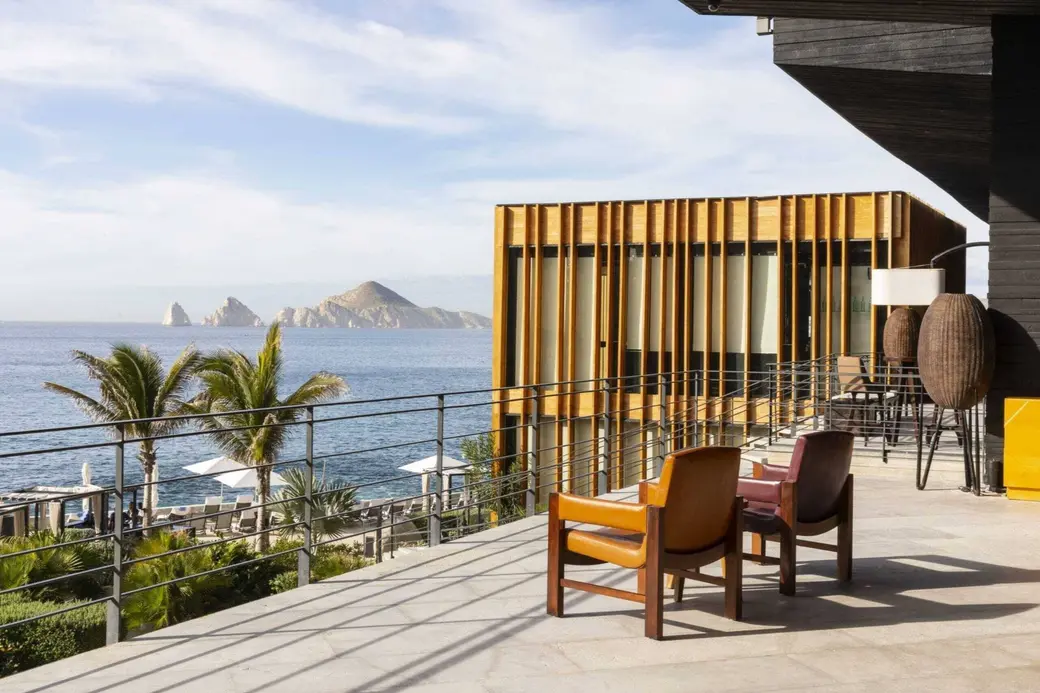
Buying or Selling a Hotel in Los Cabos: What Investors Need to Know
Los Cabos hotel real estate is having a moment. Institutional capital is moving in, trophy assets are trading, and the gap between what sellers think their properties are worth and what the market will actually pay is starting to close. Here is what anyone looking to buy or sell a hotel in Cabo San Lucas or San José del Cabo should understand right now.
The market by the numbers
For 2025, Los Cabos hotels averaged 71% occupancy and a $445 average daily rate, according to the Los Cabos Hotel Association. Heading into 2026, those numbers appear to be softening slightly as the U.S. economy has cooled and interest rates have stayed elevated, leaving buyers a bit more careful with their money. For sellers, that same environment is starting to produce something valuable: realistic pricing.
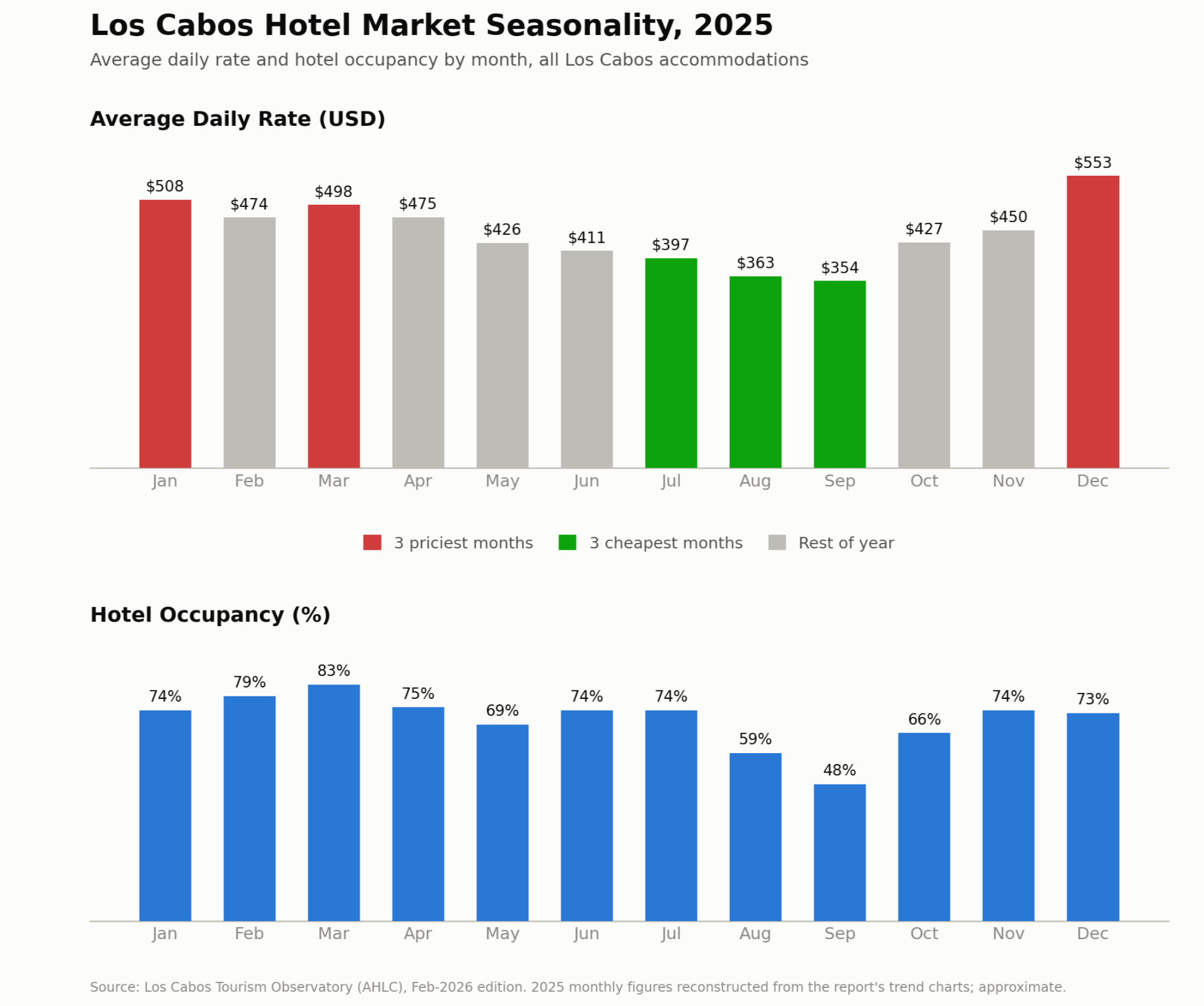 By average daily rate, the three priciest months to stay are December ($553), January ($508), and March ($498), all highlighted in red. The three cheapest are September ($354), August ($363), and July ($397), highlighted in green. Worth noting for the article: the cheapest months by rate are also the lowest-occupancy months (48%, 59%, 74% respectively), so that's genuinely a demand-driven low season rather than hotels discounting into a full house.
Institutional capital is already here
A Mexican FIBRA (the local equivalent of a U.S. REIT) recently purchased a hotel in Puerto Los Cabos for $200 million. The property had been shopped off market at $300 million before the deal closed. A comparable property on Medano Beach was also marketed at $300 million, and based on the Puerto Los Cabos sale, its realistic value once institutional capital gets involved is probably closer to $200 million as well.
That gap between ask and actual trade price is worth sitting with. Mexican institutional capital is already buying hotels in Los Cabos. Given the amount of capital sitting on the sidelines in the United States, it makes a lot of sense for U.S. investors to start looking at trophy hotel assets here as a commercial real estate play, particularly if sellers keep coming back down toward the $200 million range instead of holding out for $300 million.
Another data point worth mentioning: the Cape Hotel sold in 2018 for $125 million. Today, that asset would likely be valued closer to $200 million. It is an iconic property that also includes real estate, condo towers the hotel manages and rents on behalf of owners, generating solid income in the process.
What buyers are actually looking for
One requirement that comes up consistently with serious hotel buyers: a minimum of 40 rooms. Below that threshold, a hotel becomes genuinely difficult to operate. Plenty of boutique properties in the 20 room range exist in Los Cabos, but they struggle to justify a full-time manager and lack the scale to run efficiently. Unless the property has something truly compelling, like a standout beachfront location, these smaller hotels can end up bleeding money while competing directly with Airbnb listings rather than functioning as the iconic, trophy-style assets that institutional buyers actually want.
For that reason, this market is best understood as focused on hotels with 40 rooms and above. Below that line, buyers are entering more difficult territory as operators.
One more thing worth flagging for anyone evaluating a deal: timeshare inventory attached to a hotel can kill a transaction. A buyer looking at one iconic property here backed out specifically because the hotel included timeshare units, and untangling those commitments from a straightforward hotel sale proved too difficult. Buyers looking for a pure hotel play should ask early whether timeshare is part of the package.
Why this market is inefficient, and why that matters
Most hotel transactions in Los Cabos happen off the MLS. Part of the reason is that the local real estate community, while strong on residential, generally does not have deep commercial real estate experience. That makes for an inefficient market, and it shows up in pricing: commercial properties here can be marked up anywhere from 25% to 35% above where the numbers actually support, largely due to a lack of comparable sales data and commercial underwriting experience among local agents.
For buyers, that inefficiency cuts both ways. It means asking prices need to be stress tested rather than taken at face value, but it also means real opportunities exist for those who can identify a property's true value and negotiate from there, especially as sellers who once priced trophy assets at $300 million start coming back down to what the market will actually bear.
Bottom line
Los Cabos hotel real estate sits at an interesting point right now: institutional capital is validating pricing at the top end, softening travel demand is bringing sellers back to reality, and the market's inefficiency still leaves room for buyers who do their homework. Whether you are looking to buy or sell a hotel in Cabo San Lucas or San José del Cabo, having someone who understands both the hospitality numbers and the local transaction landscape matters.
If you are exploring a hotel purchase or sale in Los Cabos, reach out to me, Fletcher Wheaton, at fletcher@remexico.com.
Buying or Selling a Hotel in Los Cabos: What Investors Need to Know
Categories
- All Blogs (211)
- Agent Training (4)
- Cabo Golf (11)
- Cabo Legal (29)
- Cabo Real Estate (94)
- Cabo Restaurants (3)
- Commercial Real Estate in Cabo (4)
- Construction (17)
- Destination News (21)
- East Cape (7)
- Financing (3)
- Land Banking (2)
- Loreto (2)
- Luxury Homes in Cabo (11)
- Market Report (4)
- Mulege (2)
- Neighborhoods (3)
- Pre-Construction (17)
- Residency (2)
- Sports (6)
- Taxes (5)
- Todos Santos (6)
Recent Posts





GET MORE INFORMATION
