
Cabo Pre-Construction Real Estate Market
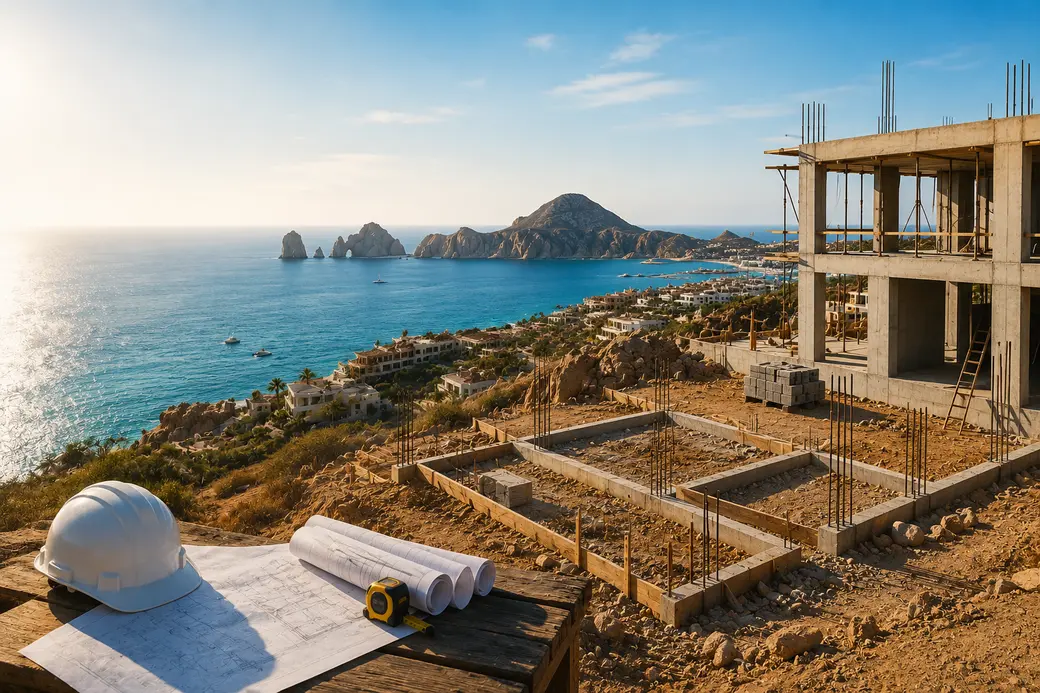
The State of Cabo's Pre-Construction Market
I talk about pre-construction a lot, and I'm not going to pretend it's a simple yes-or-no answer. Some pre-construction projects right now are genuinely good opportunities. Others are dirt lots with renders and a sales deck. The difference comes down to location, price point, and supply and demand — and right now, more than any point in the last five years, you need to understand all three before you sign anything.
The Flip: From 75% Pre-Construction to Two-Thirds Built-Out
After the pandemic, Cabo boomed. In 2020-2021, if you looked at the condo market in Cabo San Lucas specifically, somewhere between two-thirds and three-quarters of the sales happening were pre-construction. It was a genuinely compelling opportunity — new construction, ground floor pricing, a market that hadn't caught up yet.
That has basically reversed. In that same market today, at least two-thirds of what's selling is built out.
That flip matters. If you're considering pre-construction, you need to understand what's happening in the resale market first, because in a lot of cases you can get a property that's already built — no risk, no construction drama — for the same price or better than something still on paper. You can see it, touch it, get an inspection done. And you're still often getting brand-new construction that's never been lived in, which was always the main selling point of pre-construction to begin with. So the traditional argument for buying pre-construction is a lot weaker than it used to be.
Why Pricing Has Shifted
Everything has gotten more expensive. If you're reading this from the US, you already know this from your own grocery bill and insurance premium. Cabo is effectively an island — materials get shipped in, labor is in short supply and everyone's competing for it — so construction costs here have gone up right alongside everything else.
That's part of why built-out inventory is now pricing competitively against pre-construction. You're not always paying a premium for something finished anymore. So before you jump into a pre-construction deal because it "feels" cheaper, run the actual numbers against what's available built-out in the same area. A lot of buyers skip this step and just take the pre-construction price at face value.
What's Happening in Areas Like Tezal
In areas like Tezal, you'll see a mix that's worth understanding. Some projects have delivered their first towers and are now finishing out remaining inventory — I'd call that "mid-construction," and it's a very different risk profile than ground-up pre-construction. You can look at whether resales are already happening in that community as a signal of real demand.
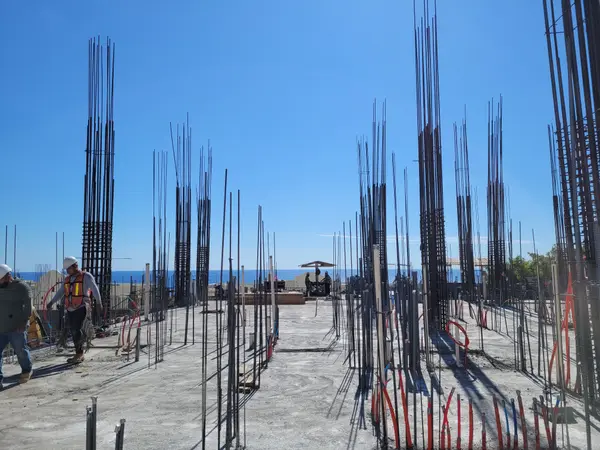
Then there are projects — I won't name them — where three or four developments launched in the same area and none of them hit enough pre-sales for the developer to actually break ground. Buyers bought in a year or two ago, and it's still just dirt. I've had buyers reach out to me directly with concerns about exactly this. If a project can't generate enough demand to start construction, that tells you something important before you ever get to the construction risk itself. And if a developer keeps launching new projects in an area that clearly isn't absorbing the supply, ask yourself why. Sometimes it's optimism. Sometimes there's something else going on with how that money is being raised and moved, and that's not a risk worth taking on for a maybe.
The Buy-Side Agent's Dilemma
Here's something buyers don't think about enough: whose incentive is your agent actually working for?
If your agent is tied to the developer, they're under pressure to sell that inventory — full stop. What I'm hearing from a lot of agents I talk to, agents who represent buyers specifically, is that they're fed up. Not with six-month delays — with one and two year delays, and close to zero communication from the developer the whole time. When that happens, it becomes the buy-side agent's job to relay bad news to a client they brought into the deal in good faith, based on a timeline the developer set and then blew through.
Most of these agents have good intentions. But after being burned enough times, a lot of them have simply stopped showing pre-construction at all. They're doing unpaid follow-up trips for two years with nothing to show a client for it. Why would they keep doing that if they can put a client into something built-out, at a comparable or better price, with none of that stress — for the client or for themselves?
Communication Has Gotten Bad
On our team we have a phrase: bad news does not age well. I wish more developers operated by that rule.
I've got situations right now where multiple agents are all reaching out to the same developer asking the same question, because there's been no update in a year. If a developer just committed to a quarterly update — good news or bad — most of this friction disappears. Buyers don't need perfection. They need to not be ignored.
The Peso-to-Dollar Excuse
A lot of people point to the exchange rate as the reason projects stall. I understand where that comes from, but it doesn't hold up as well as people think.
Quick history: after the 1994 Tequila Crisis, when Mexico defaulted on dollar-denominated bonds, the peso depreciated against the dollar for basically three straight decades. The first real reversal came in 2021-2022, when the US roughly doubled interest rates from 3% to 6% to fight inflation. The peso strengthened from around 20-to-1 down to about 16-to-1, and it's held in that general range since — call it 17.5 to 18 now.
A lot of developers underwrote their projects assuming 20 pesos to the dollar, because that's what three decades of history told them to expect. The last five years proved that assumption wrong. I'm not going to pretend I can predict currency or interest rates, and I don't put much stock in people who claim they can. But this isn't a new or surprising risk at this point — it's been the reality for a few years now. It's not a legitimate excuse for a project stalling in 2026.
What's Actually Driving Cost Overruns
The real driver is the cost to build. I've talked about this a lot with single-family homes specifically: builds stalling at 70-80% complete because the money simply isn't there anymore, even for buyers who structured payments around milestones. I've talked to people who did everything "right" with milestone-based payments and still got hit with this, because labor and materials costs are moving faster than anyone budgeted for.
I spoke with a builder whose family has supplied brick and block here for 40 years. He told me his own steel supplier used to guarantee pricing almost nine months out. Now they'll only hold pricing through the end of the month. That's the level of uncertainty running through this industry right now.
Layer in a large development with amenities, CFE (electricity) hookups, and title work, and you've got a long list of things that can go sideways that have nothing to do with the exchange rate.
I've also seen developers get themselves into a genuine bind: they need that final 20-30% payment from buyers in a tower to fund the start of the next phase. I asked one developer directly what their plan was, because it looked like they intended to deliver two towers simultaneously instead of finishing one floor at a time. That matters more than people realize — building floor by floor lets you catch and fix issues as they come up, and there will be issues. Trying to deliver everything at once, while you're already behind on communication, is a much harder position to manage problems from.
Ground-Up vs. Mid-Construction vs. Built-Out: The Real Risk/Reward
There are still pre-construction projects I like. They're not that hard to identify, and honestly it's not that hard to spot the ones to avoid either.
Think of it as a spectrum:
Ground-up / true pre-construction — nothing on-site but dirt and renders. Maximum risk, maximum reward. This is where your price is lowest but your exposure to delays, cost overruns, and outright stalled projects is highest.
Mid-construction — towers partially delivered, real data on how the project is actually progressing, resales starting to happen. Less risk, less reward, but far more visibility into whether this developer actually executes.
Built-out — you can see it, touch it, inspect it. Least risk. And right now, often priced competitively enough that the "reward" of buying pre-construction isn't even there anymore.
If you're going to take on ground-up risk, it needs a genuinely compelling reason: real sales velocity, room to negotiate, and a developer you have real confidence in. I've had developers reach out to me directly asking my opinion on projects in areas where three or four other developments already failed to hit their pre-sale targets, and their pitch is "our architecture is better, our amenities are better." At the same price point, that's a commodity argument, not a differentiator. It doesn't answer the actual question, which is whether this one is going to get built on time.
Why We've Changed How We Work With Developers
We get approached regularly by developers wanting representation, including projects previously represented by other brokerages. We've gotten a lot more selective about which of these we take on.
We've also recently updated our developer contracts specifically to hold developers more accountable on communication. It's not fair to put that burden on an agent who has no control over the construction timeline. I've seen a situation where one of our agents, working with a smaller developer who had no one else present for unit deliveries, stepped in and handled deliveries herself — not her job — because she wasn't going to leave her clients hanging. When inspection issues came up, the developer pushed back on her for raising them, when being present and accountable for a finished product was supposed to be the developer's job in the first place.
Bottom Line
I still like some pre-construction projects. But the market has more inventory, more risk-taking, and more inexperienced developers willing to take that risk than it did a few years ago, and buyers need to treat this decade differently than the last one.
If you're weighing a specific pre-construction opportunity against something built-out, or you just want a second opinion on a project you've been pitched, reach out to me or my team. Happy to help you look at it clearly before you commit.
Fletcher Wheaton - fletcher@remexico.com
Categories
- All Blogs (210)
- Agent Training (4)
- Cabo Golf (11)
- Cabo Legal (29)
- Cabo Real Estate (94)
- Cabo Restaurants (3)
- Commercial Real Estate in Cabo (3)
- Construction (17)
- Destination News (21)
- East Cape (7)
- Financing (3)
- Land Banking (2)
- Loreto (2)
- Luxury Homes in Cabo (11)
- Market Report (4)
- Mulege (2)
- Neighborhoods (3)
- Pre-Construction (17)
- Residency (2)
- Sports (6)
- Taxes (5)
- Todos Santos (6)
Recent Posts





GET MORE INFORMATION
