
Los Cabos Tourism with Rodrigo Esponda, General Director of the Los Cabos Tourism Board
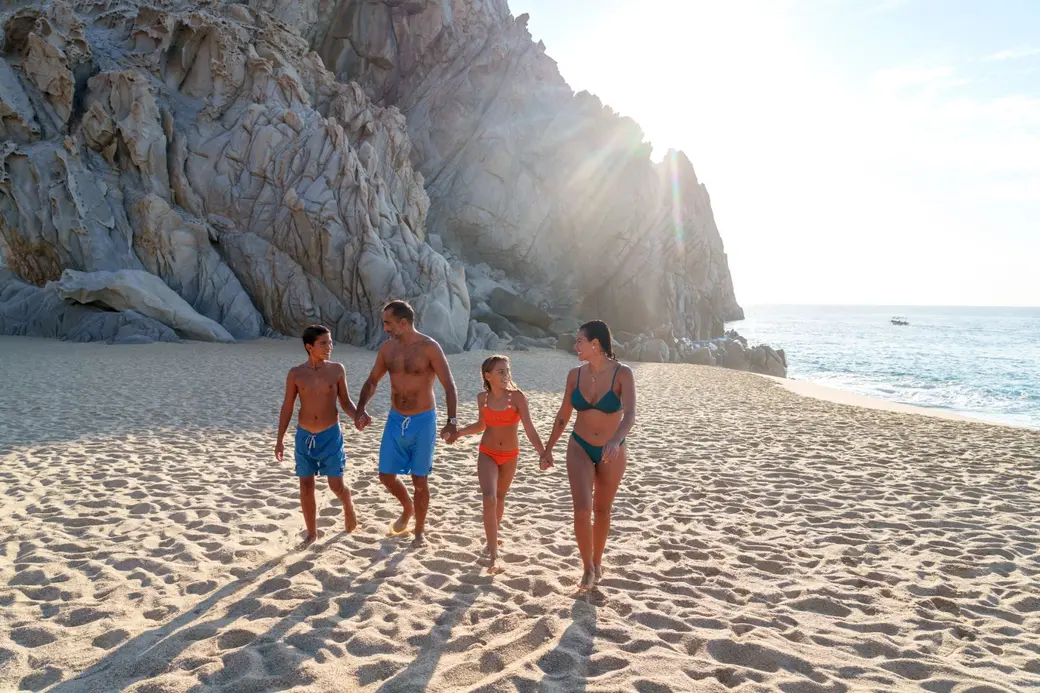
Podcast Interview: Rodrigo Esponda, General Director, Los Cabos Tourism Board
Interviewed by Fletcher Wheaton, REmexico Real Estate
Background & Career
Fletcher: I'm here with Rodrigo Esponda, General Director of the Los Cabos Tourism Board. I've been watching what your team has been doing to promote the area — the growth has been remarkable, and it's great to have such strong people behind it. This destination is truly unique.
Rodrigo: It's been a pleasure working for the Los Cabos Tourism Board for ten years.
Fletcher: That's exactly how long I've been here. You're not originally from Los Cabos, are you?
Rodrigo: No — I wasn't that lucky. I was born in Mexico City and have spent nearly 30 years in tourism. I started at FONATUR, the agency that plans the resort destinations. In 2000, when the Mexico Tourism Board was created, I applied and joined their New York office. I was later promoted to Chicago, then Canada, then back to New York. In 2016, I left to pursue something different, and the private sector in Los Cabos invited me to lead the Tourism Board. I saw it as a great opportunity to apply everything I'd learned promoting the whole country to one extraordinary destination.
A Private-Sector Funding Model
Fletcher: What's interesting is that this Tourism Board is privately funded — which is unusual. Can you explain how that works?
Rodrigo: The Los Cabos Tourism Board was founded 30 years ago with the private sector holding the majority of votes. That structure allows us to make technical decisions in favor of the destination rather than based on political considerations. In 2018, we added a second trust — Fi Pro Tur — funded exclusively by about 100 private companies. This supplemental funding lets us pursue targeted strategies around gastronomy, wellness, real estate, and luxury. The Michelin Guide is a good example. To bring Michelin inspectors to a destination, you must commit to five years of consistent funding. That funding has come entirely from our private sector partners.
Fletcher: And that second trust became critical around 2018 when federal funds were cut, right? Destinations that depended on the national government suddenly had nothing.
Rodrigo: Exactly. When the Mexico Tourism Board was disbanded, we had already committed to a nonstop flight from London — a major investment that was supposed to be co-funded by the national agency. When that funding evaporated, we had to cover 100% of the cost ourselves. Tickets were already on sale — we couldn't walk away. That crisis accelerated the creation of Fi Pro Tur, and the model has delivered enormous value ever since. We're now the only destination in Mexico that attends airline planning events and presents business cases directly to route planners. That's how we secured the Condor flight from Germany — eight years of relationship-building. Same with Copa's South America route.
Fletcher: Do you believe the private sector will continue that support as Cabo grows?
Rodrigo: I'm convinced that the private sector is the only reason Los Cabos is what it is today.
What Sets Los Cabos Apart
Fletcher: Mexico has so many beautiful destinations — Tulum, Cancun, Vallarta, Huatulco, Mexico City, San Miguel de Allende. What makes Los Cabos genuinely different?
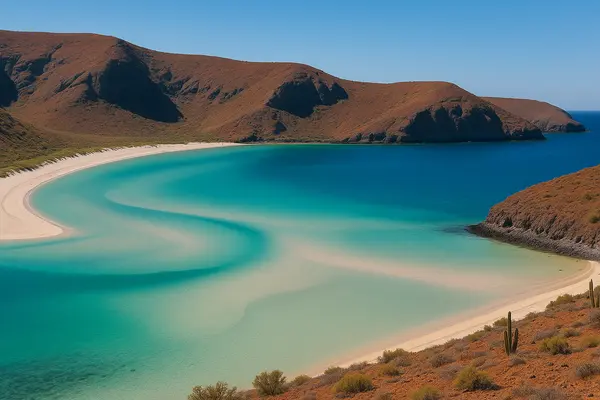
Rodrigo: Mexico is incredible, and having spent 17 years promoting the whole country, I've seen its extraordinary cultural richness and natural diversity firsthand. But Los Cabos is something singular. Three things define it for me. First, the geography: where else do you find desert, mountains, and ocean in one place — and an ocean that holds 39% of the world's marine mammals? Four out of every ten marine mammals on Earth are found here. The Sierra de la Laguna rises to over 6,000 feet, with lagoons and seven bird species found nowhere else on the planet. Second, its isolation. Los Cabos developed its own cultural identity — shaped by the Pericúes, the original pre-Hispanic settlers, then the Jesuit missionaries, then waves of later immigration. When you visit Santiago or Miraflores, you feel that layered history. Third, that same isolation created a tight, visionary community. When I explain elsewhere in Mexico that 100 private companies voluntarily pool supplemental funding here and see the return on that investment, people don't believe it. That collective mindset — prioritizing the destination over individual interest — is rare.
The Airport Advantage
Fletcher: I often joke that the most underrated thing about Los Cabos is the airport. My sister flies direct from Austin — she once told me it was easier to get here than to fly domestically in the United States. What's the status of air connectivity, and where are you looking to grow?
Rodrigo: When I started, we had 18 direct U.S. cities. Today we have 33. We're the third-busiest international airport in Mexico — behind only Cancún and Mexico City — and the second in terms of direct U.S. cities. We actually have more direct U.S. connections than Mexico City. When I arrived, there were no nonstop flights to New York, which was a clear gap given our portfolio — golf, sport fishing, culture, astronomy, luxury. We built the business case, and now JetBlue flies daily to JFK. At the top of our list now is Boston. It's a top-20 origin market in the United States, but passengers still have to connect — often through Houston or Dallas — making it a 10-to-12-hour journey. We're also targeting secondary markets: Indianapolis, Kansas City, and Nashville have all come online recently. Nashville in particular has performed very well. And Florida remains a priority — Miami, Fort Lauderdale, and Orlando all generate similar traveler volumes, and we need direct service from that region.
Fletcher: I had a client coming from Dallas to look at property in Loreto. His connection through Phoenix was canceled, he spent a night in a hotel, and by the time he arrived he was ready to give up. Connectivity matters that much.
Rodrigo: It absolutely does. And here's something relevant: starting in October, there will be a nonstop service from Scottsdale to Los Cabos with an airline called ASX. They operate a private aircraft model — you depart from the FBO, arrive at the FBO, no terminals, no check-in lines — but you book individual seats at roughly the price of a business-class ticket on a commercial flight. They already serve Los Angeles and Dallas. Scottsdale is next.
How Tourism Is Funded
Fletcher: There's a tourism tax collected at the airport. How does that work, and where does that money actually go?
Rodrigo: The international visitor tax is a federal tax, collected by the federal government. It used to fund the national Mexico Tourism Board; now it's used for other purposes. Our Tourism Board is funded differently — by 40% of the hotel tax collected locally. There are also various other taxes, which is common globally. Nearly every country has an international visitor tax; in most cases it goes to the national government, and what happens to it varies.
Beyond the Municipality
Fletcher: Do you promote beyond the Los Cabos municipality? And what areas do you see the most potential in?
Rodrigo: Visitors don't think in municipal boundaries, so neither do we. Our promotion includes La Paz, Loreto, and the entire Baja California Sur region. Repeat travelers — who make up about 40% of our visitors — are the ones who explore most. They start with Todos Santos, then expand to La Ventana, then La Paz, then Loreto and Mulegé. The Sea of Cortez is one of the world's great sailing and exploration destinations — truly irreplaceable. My personal favorite in the region is Cabo Pulmo. The community there has protected the reef for 30 years, and you can only visit with a local guide. It's one of the most powerful examples of conservation and tourism working hand in hand. The reef is alive, the marine life is extraordinary, and watching people confront their assumptions about sharks in open water — it changes how you see the ocean. East Cape overall has tremendous potential, provided whatever develops there is low-impact and high-quality.
Looking Ahead: Three Priorities
Fletcher: What needs to improve over the next five to ten years? What concerns you, or keeps you pushing harder?
Rodrigo: We can always do better, and I'd point to three areas the private sector is actively working on. First, mobility — roads. There's a strategic infrastructure plan being developed in coordination with local authorities that looks out ten years. A new municipal tax is funding exactly this type of project. Second, energy. We average 15 to 20 days of rain per year, which means extraordinary solar potential. The destination needs to develop clean, sustainable energy in a deliberate way. Third, waste. We're effectively an island — whatever comes in stays here and needs to be processed responsibly. These three things are essential to preserving what makes this place extraordinary in the first place.
Luxury Growth and Accessibility
Fletcher: Most of the hotels coming in are five-star — One&Only, Rosewood, Four Seasons, Aman. Is that gravitational pull toward the high end sustainable? Or does it squeeze out a different kind of traveler?
Rodrigo: Of our roughly 19,000 rooms, perhaps 2,000 are ultra-luxury. The diversity of what we offer actually reinforces the destination's strength. You can stay at the Holiday Inn near the marina, climb to the rooftop pool, look out at the Arch, and feel like you're in paradise — for around $100 a night with breakfast included. We have solid three-star options alongside the world's leading luxury brands. The rural experiences sector is also growing — glamping ranches, community-based stays in the highlands, things that keep the destination's identity intact. European travelers on our Frankfurt-Condor flight, for instance, often build two-week itineraries: three nights in San José, three in Todos Santos, a few days in La Ventana, then La Paz, then Loreto. That kind of multi-destination circuit is precisely what makes Los Cabos unique. You can do that, or you can spend two weeks between two luxury resorts. Both are available. Both are real.
The Biggest Mistake Visitors Make
Fletcher: What's the biggest mistake a first- or second-time visitor makes here?
Rodrigo: Staying locked in the resort. This is not a place to spend seven days at the pool bar. There's too much here — too much to explore, too many communities to visit, too much coastline to discover. Hike, see orcas, go to the local markets, visit the missions. People go home and say they loved Mexico, but their only real interaction with locals was the bartender. That works for some — but if you're doing it, get out for at least one day.
What Even Locals Don't Know
Fletcher: What do you think even locals overlook?
Rodrigo: The Sierra de la Laguna. When I started ten years ago, I asked my team about it. Nobody had ever been there. I said, 'That has to change immediately.' We've since developed a Rural Experiences Guide covering the communities of Caduaño, La Candelaria, Miraflores, Santiago, and El Triunfo. We've trained 62 local providers — teaching them social media, email, product development, guest experience. Many are now thriving. One ranch owner walked me through his property recently and asked, 'Would you like to see the cave paintings?' He had pre-Hispanic cave art on his private land, accessible only with him as a guide. Most people in Mexico — let alone the world — have no idea that the Pericúes, the original inhabitants of this southern tip of Baja, left behind an artistic and cultural legacy that rivals anything on the mainland. Knowing you live near that and never having seen it is a missed opportunity.
The Perfect Day
Fletcher: Last question: what's your perfect day in Los Cabos?
Rodrigo: I wake up early in Cabo Pulmo. I drive the scenic route through Santiago and Miraflores. I dive in the morning. Around midday I have tacos right there on the beach. Then I take the coastal road back, stop at empty beaches, put up an umbrella, read, and watch whales breach offshore. I'm home by six or seven in the evening, having spent a full day alone with nature. And the best part? It costs almost nothing. The outdoors here is free. We have 25 Blue Flag–certified beaches — environmental controls, lifeguards, parking, signage — all free. There are very few places in the world where a day like that is possible.
Fletcher: Rodrigo, thank you. I appreciate your time and everything your team is doing. Cabo's growth is real, and knowing that there are people behind the scenes — funding the glamping projects, securing the flights, supporting the local providers — that's what people should understand. It's not happening by accident.
Rodrigo: Thank you very much.
Categories
- All Blogs (213)
- Agent Training (4)
- Cabo Golf (12)
- Cabo Legal (29)
- Cabo Real Estate (96)
- Cabo Restaurants (3)
- Commercial Real Estate in Cabo (4)
- Construction (17)
- Destination News (21)
- East Cape (7)
- Financing (3)
- Land Banking (2)
- Loreto (2)
- Luxury Homes in Cabo (11)
- Market Report (5)
- Mulege (2)
- Neighborhoods (3)
- Pre-Construction (17)
- Residency (2)
- Sports (6)
- Taxes (5)
- Todos Santos (6)
Recent Posts





GET MORE INFORMATION
