
Living in Cabo Full-Time: The Reality Beyond the Vacation
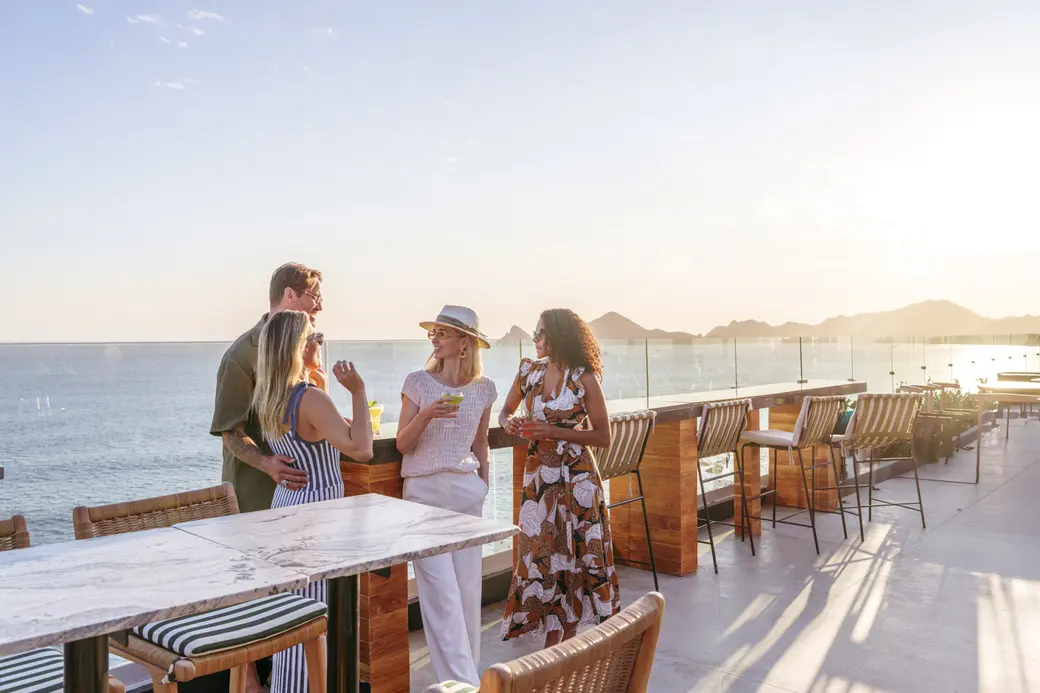
What did you leave behind — and what has Cabo given you?
A conversation with Fletcher Wheaton, real estate broker and 10-year Cabo resident Interview by Alejandro Ehrenberg, Editorial Director, Destino Magazine
Alejandro Ehrenberg: We're here with Fletcher Wheaton — broker, real estate professional, and someone who's built a successful career here in Cabo over the last decade. I moved here from Mexico City about four years ago, so I thought this was a good time to reflect on what we left behind, what Cabo gave us, and try to put it all in perspective.
Let's start there — what did you give up when you left New Orleans that you thought you'd miss but actually don't?
Fletcher: Coming from a tight-knit community like New Orleans, so much is about social connections. Opportunities came easier just because you knew everybody. So there was definitely opportunity I thought I was leaving on the table, and that was scary.
But being forced to assimilate — not just with local Mexicans, but also with transplants from the U.S. and Canada — pushed me to build a different kind of social circle. I'm not a different person, but it forced a kind of growth that I think would have stalled if I'd stayed in New Orleans, where you're basically still hanging out with the same people you went to high school with.
Alejandro Ehrenberg: And New Orleans isn't a huge city, right?
Fletcher: Metro area is over a million, but the city itself feels much smaller. And the thing is, Cabo isn't like most Mexican cities. If you moved to La Paz or Guadalajara, you'd find a very tight-knit local society that's almost impossible to penetrate as an outsider. Here it's open and cosmopolitan.
But what people don't realize is what it was like when I first moved here. There was no Amazon. Back in the States at that point, people were ordering toothpaste online — it was effortless. Here, if you needed a specialized tutor or a medical specialist, you might have to drive to San José del Cabo. Now there might be two or three options right here in Cabo, and the quality is solid. The infrastructure is still limited compared to bigger cities, but it's come a long way.
Alejandro Ehrenberg: For me, coming from Mexico City — 25 million people — it still felt like a small town because you're always around the same people from high school. Here, even at half a million people, almost nobody is actually from here.
Fletcher: Exactly. It's rare to meet someone over the age of 20 who was actually born here. So everyone is open to meeting people — we're all in the same boat. We all came here, had to learn a new culture, and built something from scratch.
Alejandro Ehrenberg: Is there anything you genuinely miss from New Orleans that you just can't find here?
Fletcher: The live music scene, for sure. And I don't want to say there's no culture here — Cabo is absolutely a brand — but New Orleans has a depth of food, music, and tradition that's hard to replicate anywhere. The live events piece is something that just doesn't really exist here yet. Though I'll say, I'm getting to the point where I don't even want to go out past 8 p.m., so it's less of an issue for me personally.
Alejandro Ehrenberg: That's fair. Cabo as a city is only 40 or 50 years old. New Orleans was founded in the 17th century. You really can't compare them.
Fletcher: Exactly. I have to check myself on that. What's interesting to me is living somewhere that's being assembled in real time. I've never experienced that before. And it's actually exciting — if you take a city like Houston or New Orleans, they're asking, "What do we need to upgrade from infrastructure built a century ago?" Here, you have the opportunity to build it right from the beginning, with modern infrastructure and resources flowing in. It's a completely different animal.
Alejandro Ehrenberg: You also get to see the mistakes as they're being made.
Fletcher: Right. And sometimes I look at decisions being made now and think, "That's going to be a problem in five years." But some things are being done well. It's a mixed bag.
Alejandro Ehrenberg: One thing I find interesting about living here is that tourism is by far the dominant industry. New Orleans has tourism too, but it also has oil and gas. Here, everything gravitates around tourism, which gives it a very distinctive feel — everything is transient, everything is fleeting.
Fletcher: A hundred percent. In a place like New Orleans, you have a tourist zone and then a local zone. Here, a lot of businesses exist specifically for tourists, not necessarily locals. And that creates a certain transactional quality to relationships and the economy.
The risk is real — you saw what happened during the pandemic when 98% of activity disappeared in a month. I've been thinking about what it would take to diversify. Medical tourism is one. Banking is another. Panama just leapfrogged Costa Rica for the first time in 20 years because of infrastructure investment, and a client I was with recently told me the medical facilities and treatment experience in Panama are incredible. And I thought — it's a four-hour flight from Cabo to Panama. Why can't we have something like that here?
You'd need municipal, state, and possibly federal backing to make it happen. Manufacturing doesn't make sense here — you have to import everything. But a service-based industry like medical, or even financial services — think about what happened in Miami when Wall Street workers stopped coming into New York offices. I'm seeing more Mexico City buyers here than at any point in my 10 years. If a major bank set up a regional office or lending operation here, that changes things.
Alejandro Ehrenberg: When you're so specialized in one industry, you're exposed. Any contraction in the U.S. economy hits Cabo hard. Speaking of which — you work in real estate, which requires thinking in both short- and long-term timeframes simultaneously. Most buyers come here first as tourists and then start thinking about buying. What are the key differences between the tourist mindset and the buyer mindset?
Fletcher: During the pandemic, you had a lot of impulse buying. Easy credit, lower prices, a sense of urgency — people would come down for a week and just pull the trigger. If you go back to early 2021 when the market was absolutely on fire, people were making decisions they probably shouldn't have made.
Now it's almost the opposite. It's rare for someone to come down for the first time and buy on that trip. People are much more patient, much more intentional. And I think that's how it should be. When you're making a purchase that significant, taking three months, coming back, sitting with it — that's the right approach. You're much less likely to make a mistake.
Alejandro Ehrenberg: And once people move here, what separates those who stay long-term from those who eventually leave?
Fletcher: I've seen it go both ways. Just last Friday, we were with someone who wants to sell a beachfront property in the East Cape — a financial decision — and his wife mentioned she didn't really connect with anyone until they stayed for an extended period during the pandemic. She needed that time.
Some people buy here with this retirement dream, but they're not outgoing people. They come down and it's like — okay, now what? Then you have people who are intentional: they love the outdoors, they play golf, they want to meet people, and Cabo gives them a second wind. It literally adds years to their life compared to going back to the same routine at home.
I also know people who spend more time with their families because they have a place here, and people who bought expecting their families to visit — and the family never comes. So you have to be honest with yourself about what you're actually building here.
Alejandro Ehrenberg: Is there a social scene here, or does everyone just build their own?
Fletcher: It's very niche-based. Take someone in Querencia who plays pickleball — their immediate circle is probably neighbors in that community. Then they branch into the broader pickleball scene, then maybe golf, poker nights, restaurants. But it all starts with where you live.
If you're in a house out in the East Cape, building a social network is going to be much harder. What surprises me is how many people I know here who are kayak fishermen — they have their WhatsApp groups, they're texting each other when the dorado are running off a certain point. The surfing community is the same way. There are all these super-niche networks that you plug into.
The advice I give people: before you buy anywhere, think about what a normal Tuesday looks like for you, and then choose your location based on that. You can fall in love with a beach and be completely isolated if the activities and community aren't there. And if it's a couple, both people need to have something here — otherwise you end up with one person wanting to be here and the other not, and that creates its own problems.
Alejandro Ehrenberg: What surprised you most about living here?
Fletcher: Something that surprised me early on was the depth of the Cabo brand. In New Orleans, people either love it or hate it immediately — strong reaction either way. Here, I kept meeting people who had been coming for 20 or 30 years, or whose parents brought them as kids. The repeat loyalty to this place is remarkable. The brand has real staying power.
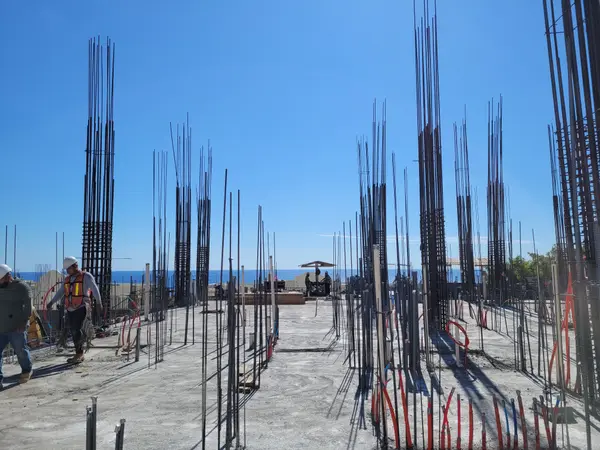
On the daily life side — and this connects to what you said about the city being assembled in real time — I genuinely didn't anticipate how raw everything would still feel. The dust, the construction, the flat tire from road debris. But also the cultural scene being a work in progress. Coming from somewhere where things are established and you know how they work, adapting to that has been a real exercise.
Alejandro Ehrenberg: You've been intentional about integrating — you learned the language, you're working toward citizenship. So you see beneath the glossy surface. When you put it all on the scale — what does the equation look like?
Fletcher: Economically, people might find this hard to believe, but I think it would be difficult for me to replicate what I've built here if I had moved to a U.S. city where I had no connections. I found a rhythm here that worked. So economic opportunity is number one.
Number two is lifestyle. I can go for a hike any morning. The weather — it was cloudy literally one day in the last three months. The ability to go out and do things outdoors is extraordinary. And even after 10 years, I'm still finding new places. We did a hike out to San Dionisio recently and it was unlike anything I'd seen here before. There is still so much uncharted territory.
Number three — and I know this resonates differently for different people — is the distance from the noise. The U.S. is heavy right now with politics, and while that energy is spreading globally, here I genuinely feel free to focus on what I want to build. The lifestyle and the mindset that comes with it are a real factor.
And then there's my son's education. People in the U.S. would be shocked to hear me say this, but his school here is excellent — and the cost is a fraction of what a comparable private school would run in the States. Even if you took cost out of the equation entirely, I'd still take his school here.
Alejandro Ehrenberg: For me it's the growth economy — this state consistently outperforms the national average — and honestly, safety. Compared to almost anywhere else in Mexico, and frankly compared to New Orleans as well, it's not something I think about day-to-day.
Fletcher: Same. I don't think about it. The interstate at night can be a concern with drunk drivers, but in terms of day-to-day safety, it never crosses my mind. Anyone who's actually spent time here will say the same thing.
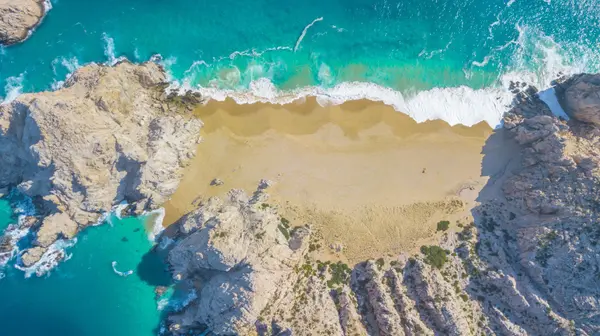
And the natural beauty — even when I'm annoyed by some ugly building going up, I drive five minutes down to the waterfront and it resets everything. If you drive north from Cabo toward Loreto, maybe 5% of that coastline is developed. You're looking at a raw, dramatic landscape that California lost 60 or 70 years ago.
There's bureaucracy, there are challenges — everyone knows that. But once you work through it and actually settle into the life here, all of it becomes worth it.
Fletcher Wheaton - fletcher@remexico.com
Alejandro Ehrenberg - alejandro@destinoloscabos.com
Categories
- All Blogs (209)
- Agent Training (4)
- Cabo Golf (11)
- Cabo Legal (29)
- Cabo Real Estate (94)
- Cabo Restaurants (3)
- Commercial Real Estate in Cabo (3)
- Construction (17)
- Destination News (21)
- East Cape (7)
- Financing (3)
- Land Banking (2)
- Loreto (2)
- Luxury Homes in Cabo (11)
- Market Report (4)
- Mulege (2)
- Neighborhoods (3)
- Pre-Construction (16)
- Residency (2)
- Sports (6)
- Taxes (5)
- Todos Santos (6)
Recent Posts

GET MORE INFORMATION
