
What is Derecho de Tanto in Mexico Land Purchases?
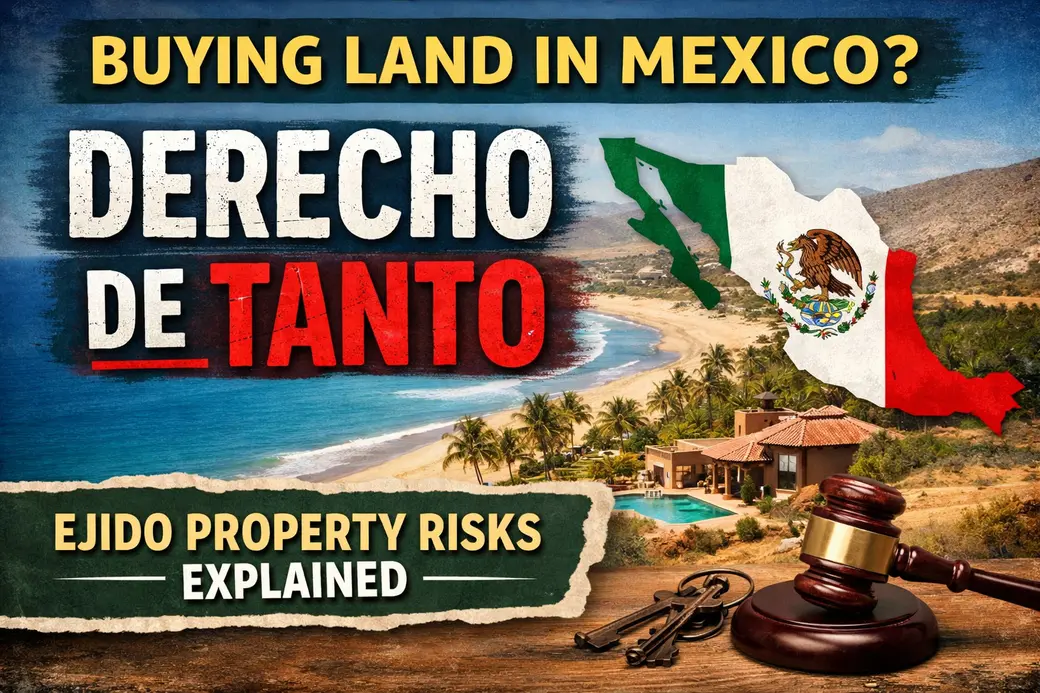
Understanding Derecho de Tanto in Mexico: What Buyers Need to Know About Ejido Land
If you’re buying land in Mexico—especially in areas like Baja California Sur—it’s not uncommon to come across a term that can raise concern:
“Derecho de Tanto” (Right of First Refusal).
For many foreign buyers and even agents, this concept can feel confusing, overly legal, and sometimes even alarming. But in practice, it’s often misunderstood—and rarely a deal breaker when properly analyzed.
This guide breaks down what it means, where the risks actually are, and how to approach it intelligently.
What Is Derecho de Tanto?
Derecho de tanto is a legal concept under Mexico’s agrarian law (Ley Agraria) tied to ejido land.
An ejido is a form of communal land ownership that was historically distributed for agricultural use. Members of the ejido (called ejidatarios) have certain rights, including:
- The ability to use and occupy land
- Participation in decisions regarding land use
- A right of first refusal when land is sold
This means that before ejido land is sold to a third party, eligible members (or sometimes family members of the original owner) must be given the opportunity to purchase the property first.
Why Does This Matter in Real Estate Transactions?
When ejido land transitions into private property (dominio pleno) and is sold, there is supposed to be a formal process:
- Notification is given to ejido members
- They formally waive their right to purchase
- A document is issued confirming this waiver
This waiver is what’s commonly referred to as the “derecho de tanto” clearance.
The “Omission” Scenario (Where Concerns Arise)
In some transactions—especially older ones—this process was not properly documented.
This creates what is commonly called an “omission” of derecho de tanto.
In simple terms:
- The land was legally transferred
- It became private property
- It may have been resold multiple times
- But the formal waiver document was never issued
This is more common than many buyers realize, particularly in areas like Pescadero, Todos Santos, and parts of Baja Sur.
Is This a Real Risk?
Here’s where context matters.
According to legal analysis and practical experience:
- The derecho de tanto is not a perpetual right attached to the property
- It is a procedural right tied to a specific moment in time (the initial transfer out of ejido)
- It must be exercised within a defined timeframe after proper notice
Even in cases where the process wasn’t followed perfectly:
- Claims are generally considered time-barred (statute of limitations)
- Decades of private ownership, notarized transactions, and public registry records override theoretical claims
- A strong chain of title provides significant legal protection
As stated in the legal review:
The possibility of an ejido or third party asserting a preferential right at this stage is considered extremely remote and without practical legal viability.
What Strengthens the Security of the Title?
A property becomes increasingly secure when it has:
- Multiple subsequent private sales
- Registration in the Public Registry
- Formal subdivision and conveyance
- Succession processes (inheritance transfers)
- No recorded liens or legal disputes
All of these factors contribute to what’s known as a “consolidated chain of title.”
The longer and cleaner this chain is, the lower the real-world risk.
Worst-Case Scenario (Realistically)
From both legal experts and on-the-ground experience:
- There are no commonly documented cases of someone successfully reclaiming property decades later due to this omission
- The most realistic “issue” is:
- A future buyer asking the same question you’re asking now
- Additional documentation being requested during resale
In other words, the risk is typically administrative, not ownership-related.
Can This Be Fixed?
Yes—there is a practical solution if buyers want maximum certainty.
Option: Obtain the Derecho de Tanto Waiver
- The current owner can notify the ejido
- The ejido issues the formal waiver document
- This document is then attached to the deed by the Notary
Once completed:
- The omission is fully cured
- The property is considered 100% compliant
- Future buyers will not have to revisit the issue
Cost Consideration
In practice, this process may involve a fee (commonly around ~1% of property value, though it varies).
This is often why it was not completed historically.
Should You Fix It or Move Forward As-Is?
This becomes a strategic decision, not just a legal one.
Move Forward Without Fixing
- Common in many markets
- Minimal real-world risk
- Faster transaction
Fix the Omission
- Cleaner title for future resale
- Eliminates buyer objections later
- Peace of mind for long-term ownership
Many buyers choose to:
- Ask the seller to cover the cost
- Negotiate a split
- Or pay it themselves to eliminate future friction
Key Takeaways for Buyers
- Derecho de tanto is not an ongoing claim on the property
- It is tied to the initial ejido-to-private transition
- Older omissions are very common in Baja markets
- Legal risk is typically extremely low when title is clean and registered
- You can fix it, but you don’t always need to
Final Thought
This is a perfect example of where understanding Mexican real estate nuance matters.
On paper, it can sound like a major red flag.
In practice, it’s often just a technicality that has already been neutralized by time, legal structure, and precedent.
The key is not to ignore it—but to understand it properly, assess the context, and make an informed decision.
Always speak to a local licensed real estate attorney when purchasing real estate in Mexico, this article is not legal advice.
Fletcher Wheaton fletcher@remexico.com
Alejandro Donnadieu alejandro@caborealestate.com
Categories
- All Blogs (207)
- Agent Training (4)
- Cabo Golf (11)
- Cabo Legal (29)
- Cabo Real Estate (94)
- Cabo Restaurants (3)
- Commercial Real Estate in Cabo (3)
- Construction (17)
- Destination News (21)
- East Cape (7)
- Financing (3)
- Land Banking (1)
- Loreto (1)
- Luxury Homes in Cabo (11)
- Market Report (4)
- Mulege (1)
- Neighborhoods (2)
- Pre-Construction (16)
- Residency (2)
- Sports (6)
- Taxes (5)
- Todos Santos (6)
Recent Posts







GET MORE INFORMATION
