
Winning Listings in Los Cabos: Why Expertise Matters More Than the Sales Pitch
Want More Listings? Stop Showing Up Like a Salesperson and Start Showing Up Like an Advisor
Most real estate agents walk into a listing presentation prepared to talk about themselves. Here's our company. Here's our marketing. Here's our website. Here's what we think your property is worth.
During a recent REmexico Real Estate training session with Colorado real estate professional Bryan Rodriguez, he presented a different way of looking at it: treat the listing presentation like you're interviewing for a very well-paid job.
Think about that for a moment. If you're competing for a $1 million, $2 million or $5 million listing in Los Cabos, the potential commission associated with that transaction can represent what many people earn in an entire year. Why wouldn't you prepare accordingly?
That preparation should begin long before you walk through the seller's door. Don't simply pull three comparable properties and calculate a price per square foot. Understand the property, the neighborhood, competing inventory, recent sales, days on market and what's being developed nearby. Understand the larger market and the factors that could ultimately affect that seller's ability to sell.
In Los Cabos, that can go considerably further. What's happening with tourism? What new hotels or developments are coming? What's happening with inventory? How long are properties actually taking to sell? What are buyers negotiating? Is the property's neighborhood improving? Is new infrastructure being built nearby? How does the property compare with what a buyer can purchase in another part of Cabo?
Your job isn't simply to tell the seller what their property is worth. Your job is to help them understand the environment in which they're making a decision.
Bryan calls this due diligence, and one of the things I liked about his approach was how much information he sometimes brings into a presentation. For a development opportunity, that can include surrounding projects, zoning, comparable properties, potential uses, rental information, maps, market conditions and even conceptual ideas for what could potentially be built.
Obviously, not every condo listing requires a 40-page investment memorandum. The larger principle is what matters: bring more useful information than the client expects.
That's one of the ways an agent moves from salesperson to advisor.
Another idea from the training was to stop telling clients how good you are and start showing them. Bryan uses what he calls "report cards" to demonstrate his actual performance. Instead of saying, "I'm a strong listing agent," he can show the properties he's represented, the original list prices, final list prices, sale prices, days on market and other relevant results.
I think that's something every experienced agent should consider.
If you say you're good at pricing properties, show the results. If you say you're a good negotiator, show examples. If you say you know how to sell difficult properties, show what you've done. Evidence is more powerful than adjectives.
The same principle works for newer agents. An agent who hasn't closed 50 transactions yet shouldn't pretend otherwise. But they can demonstrate the experience and resources of their team and brokerage while also highlighting whatever professional experience they personally bring to the table. The point isn't to exaggerate. The point is to arrive prepared.
Being prepared also means understanding much more than what's in the MLS. A good real estate professional should be a student of the entire environment.
If you're showing property in Palmilla, Querencia, Cabo del Sol, El Tezal, the East Cape, Todos Santos or anywhere else in our market, you should know what's happening around you. What's being built? What's selling? What's struggling? Where are prices moving? What restaurants, hotels, golf courses or infrastructure projects are coming? What are buyers asking about?
When a client points out the window and asks, "What's happening over there?" the answer shouldn't always be, "I'll find out."
Know your market.
At the same time, knowing a lot isn't particularly valuable if you can't communicate it. One of the most important skills for an agent today is taking complicated information and making it simple.
Clients have access to more information than ever before. The agent's value isn't necessarily having access to information that nobody else can find. Increasingly, the value is knowing which information matters, whether it's reliable and what it means for the client's decision.
AI can be extremely useful here. It can help organize information, analyze data and simplify complicated subjects. But the underlying information still matters. Bad data processed quickly is still bad data. Technology should amplify an agent's expertise, not replace it.
Winning the listing is also only half the job. Managing the relationship after you get the listing is just as important.
Bryan shared one extremely simple habit: every Friday, he contacts his sellers.
I like the simplicity of that.
The communication doesn't have to be dramatic. Maybe there were showings. Maybe there weren't. Maybe a comparable property sold. Maybe a new competing listing entered the market. Maybe you've received useful buyer feedback. Maybe something important happened in the neighborhood. Maybe tourism numbers changed. Maybe your marketing generated significantly more attention that week.
The point is to bring the seller something useful.
Calling every week simply to say, "No showings and no offers," isn't particularly valuable. Sellers already know the property hasn't sold. They need an advisor who can put what's happening into context and help them understand what, if anything, should happen next.
Silence creates uncertainty. Communication creates confidence.
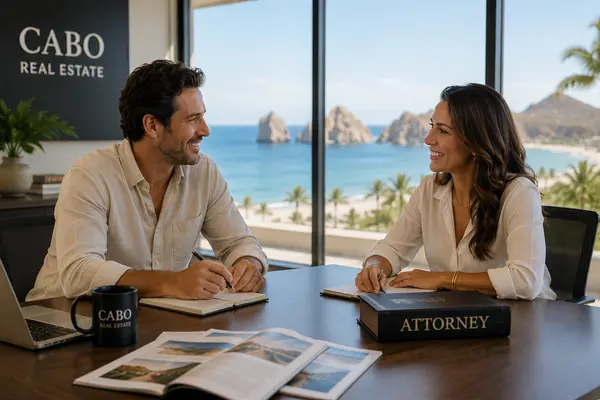
The larger lesson from the training was that the best real estate professionals remain students of their markets. They tour developments. They talk to attorneys. They understand contracts. They watch infrastructure. They study sales. They attend events. They talk to developers. They learn about areas outside their immediate niche, and increasingly they use technology to process all of that information faster.
Real estate will always involve sales, but the profession is increasingly about expertise.
The agents who combine expertise with preparation, communication, consistency and genuine client care are going to be very difficult to compete against.
Categories
- All Blogs (221)
- Agent Training (5)
- Cabo Golf (12)
- Cabo Legal (32)
- Cabo Real Estate (98)
- Cabo Restaurants (3)
- Commercial Real Estate in Cabo (4)
- Construction (18)
- Destination News (21)
- East Cape (7)
- Financing (3)
- Land Banking (2)
- Loreto (2)
- Luxury Homes in Cabo (11)
- Market Report (5)
- Mulege (2)
- Neighborhoods (3)
- Pre-Construction (17)
- Remexico Real Estate Agents (1)
- Residency (2)
- Sports (6)
- Taxes (5)
- Todos Santos (7)
Recent Posts





GET MORE INFORMATION
